Notes on Learning to Cook in Guiyang
A draft food essay for Chang's mom and dad, for Guiyang, and for a not-quite-serious course of study.
Written on July 21, 2026
2026 Summer, July 6–18
Body#
Early this year, with no idea where I’d land, Chang told me her auntie invited me to stay at her family’s place over the summer and learn to cook. As it happened, this year’s JCSDS was being held in Guiyang, so the moment I graduated in July, I figured I’d go — wherever I ended up, I wanted to be able to cook something decent, and I’ve always liked spending time with Chang’s parents. I could have gone together with Chang, except somebody had renewed her lease on life in Zurich and was suffering through a rare heat wave there instead.
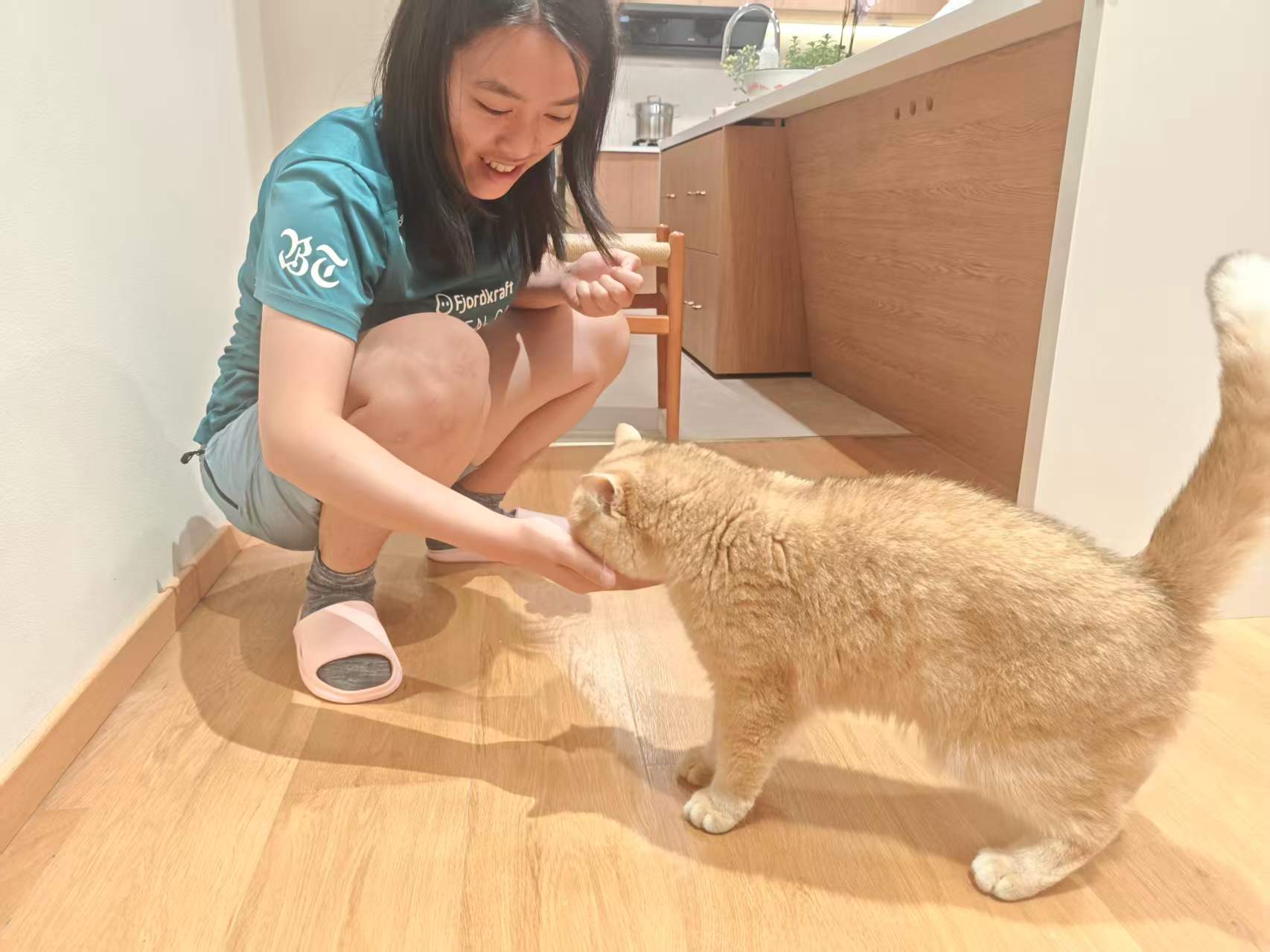
I hadn’t even finished packing away the feelings of graduation and goodbye before I was already far from Tanglang. On the afternoon of the sixth I came out of Exit A at Guiyang station and there was Auntie, warm as ever, chatting away just like two years ago. With Uncle’s driving skills to thank, we made it smoothly to their new place. I toured the house — a warm, clean, unfussy wood-toned design — and met the aloof, unbouncy little Jerry. I washed my hands right away and Auntie tied an apron on me and pushed me up to the stove, facing the fresh wild mushrooms Grandpa had bought and the carefully chosen black-pig pork belly. Under Uncle’s guidance I tried to understand the basic mechanics of stir-frying and cooking meat — how to tell when something’s done, when to add what, when to put it back in the wok. I don’t remember the technical details anymore, only that the braised lamb on the dinner table that night still lingers in my memory. There was also a very particular daily ritual: every night Chang’s family ferments their own yogurt. From the first day I always stirred in a spoonful of honey, then sprawled on the cool, smooth leather sofa watching a movie while stirring my yogurt — pure indulgence. And of course watching movies was itself a daily activity; Uncle and Auntie have seen more films than I can count.
Flipping through photos to retrieve the memories —
Day two, I scrambled out of bed in a rush to make the eight o’clock breakfast — truthfully I was exhausted and had stayed up too late the night before, and had zero desire to go sit through the short lecture, but a meal is a meal after all. This must have been my first breakfast of the year, and a rich one too: salted duck egg, pickled radish, boiled egg, black rice congee, steamed buns. I could list off the whole menu, and honestly I should, because I’d never seen an ordinary breakfast like this — at home, all three meals a day are just rice or congee with side dishes, no soup, and never steamed buns or boiled eggs. Everything felt so natural and unhurried, there was so much food, I ate slowly, throat tight with something. Over the next few days I gradually got used to this kind of breakfast.
This is turning into a diary entry. I don’t feel like describing the short course or the conference — honestly, I might as well not have gone. I’m not cut out for studying anyway; I just used Professor Jiao’s funding as a decent excuse to come play in Guiyang.
Chang’s parents are both remarkably even-tempered, careful, and thoughtful, and they treat me as an equal — they listen to what I say and also patiently offer their own opinions and thoughts, and gave me ideas for where to eat and inspiration for renting a car. We rented a Magotan for a day. The first time I got stuck in the underground garage of their complex, Uncle came to my rescue; the second time I scraped the front bumper, and even the photos for the insurance claim were staged with Uncle’s help. This was also my first time getting a real feel for a car’s power and handling, and I confirmed that I genuinely enjoy driving.
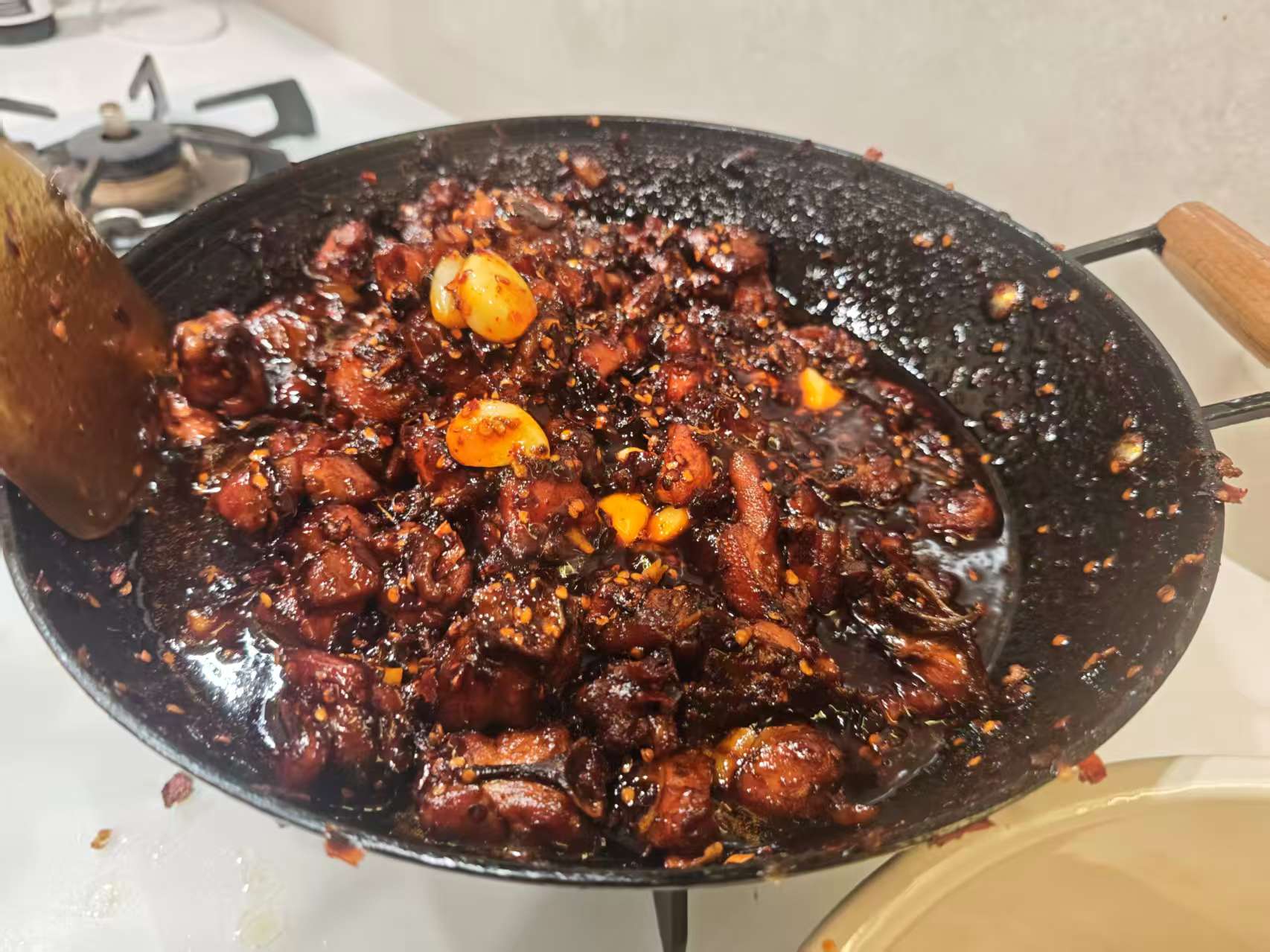
I suppose I should get to the cooking. The first dish that really stuck with me was Guiyang-style spicy chicken. It’s nothing like the Sichuan-Chongqing version — here every household fries up a big potful and keeps it around, to toss with noodles, eat over rice, or serve as a dish on its own. Back in my first year of college, Uncle once mailed some to Chang, packed in an old Lao Gan Ma jar — it looked just like something you’d buy off a shelf.
In the morning we went first to a butcher Auntie knows well for a good chicken. Once it was chopped and washed, it was time to fry. A whole wok of rapeseed oil heated until it bubbled, then the chicken went straight in, fried until the smell of chicken filled the whole kitchen — you have to keep turning it the whole time so it doesn’t scorch, real physical labor. Then the chicken gets set aside while you pick out a generous amount of pounded chili paste and minced garlic and start frying the seasoning, until the chili skins curl up, then add the chicken back in and stir-fry over low heat until the oil turns clear, then scoop it all out. Salt and ginger go in as needed. The whole process takes quite a while and needs patience and stamina — I figure one batch I make should last me a month of eating.
Auntie Yuemei says: not a drop of water added!
Recipe Card
Ingredients
- Chickenchopped into pieces, fried first for fragrance
- Pounded chili pastehomemade or store-bought
- Rapeseed oil, garlic, ginger, saltadjust to how the wok looks
Steps
- Fry the chicken until fragrant, then scoop out and let it rest a moment.
- Fry the chili paste and garlic-ginger until fragrant, then return the chicken to the wok.
- Stir slowly over low heat until the oil goes from cloudy to clear — that's when the flavor's locked in.
By the time the spicy chicken was done I felt completely wiped out and had no interest in a movie. After cleaning up the kitchen I dumped the chicken into a bowl, and felt a real rush of accomplishment — the red oil glistening, the chicken pieces piled up every which way, chilies scattered about at random. Uncle and Auntie and I played Settlers of Catan, a board game I’d long heard of but never actually played; my brain was too lazy to strategize, so I just went with whatever felt right. I really envy the atmosphere in Chang’s family ^^
The day after that was the wrap-up of the JCSDS short course. In the morning I sat through the professors’ talk, then rented a car afterward to get a feel for how Guiyang people drive — kept taking wrong turns, kept doing U-turns, picked up Luo Yue and then ran a red light at Jiaxiu Tower. As a novice driver stunned by the overpasses and electric scooters riding in the leftmost lane, I also kept failing at merging, all because I was in the wrong lane to begin with. In Guiyang, the moment you flip on your turn signal, the taxis and rideshare cars behind you swarm forward — enough to scare off someone as timid as me.
I spent the day off between the short course and the conference driving around, and came away with experience navigating back alleys, renting a car that ended up in an accident, and the skill of quickly finding a traffic cop to issue a liability report. That day I had chang wang noodles with a big cutlet added — too oily, won’t be doing that again. Two years ago, coming down from the mountains, I’d thought it was the most delicious thing in the world.
On the first day of the conference, I showed up late to an overcrowded hall and sat with Luo Yue through half an hour of a talk, but couldn’t hear a thing, so we slipped out. We went to Yelang Valley, but it was too hot, so I tagged along (mooched a ride) with Luo Yue to eat sour soup beef at Guichu — a two-person set eaten by one person. Back in Huaxi, just as I was about to catch up on sleep, I found Uncle and Auntie had also made cold noodles, to go with the spicy chicken — life really does run on carbs! That evening we all had dinner plans with Professor Jiao, and out of nowhere Luo Yue treated everyone to two drinks each up at the tea mountain. I tried a rosehip drink and it assaulted my whole mouth, so I gave up on it. The whole evening was full of gossip and listening, and we didn’t get back to the room until ten. Another movie-less day.
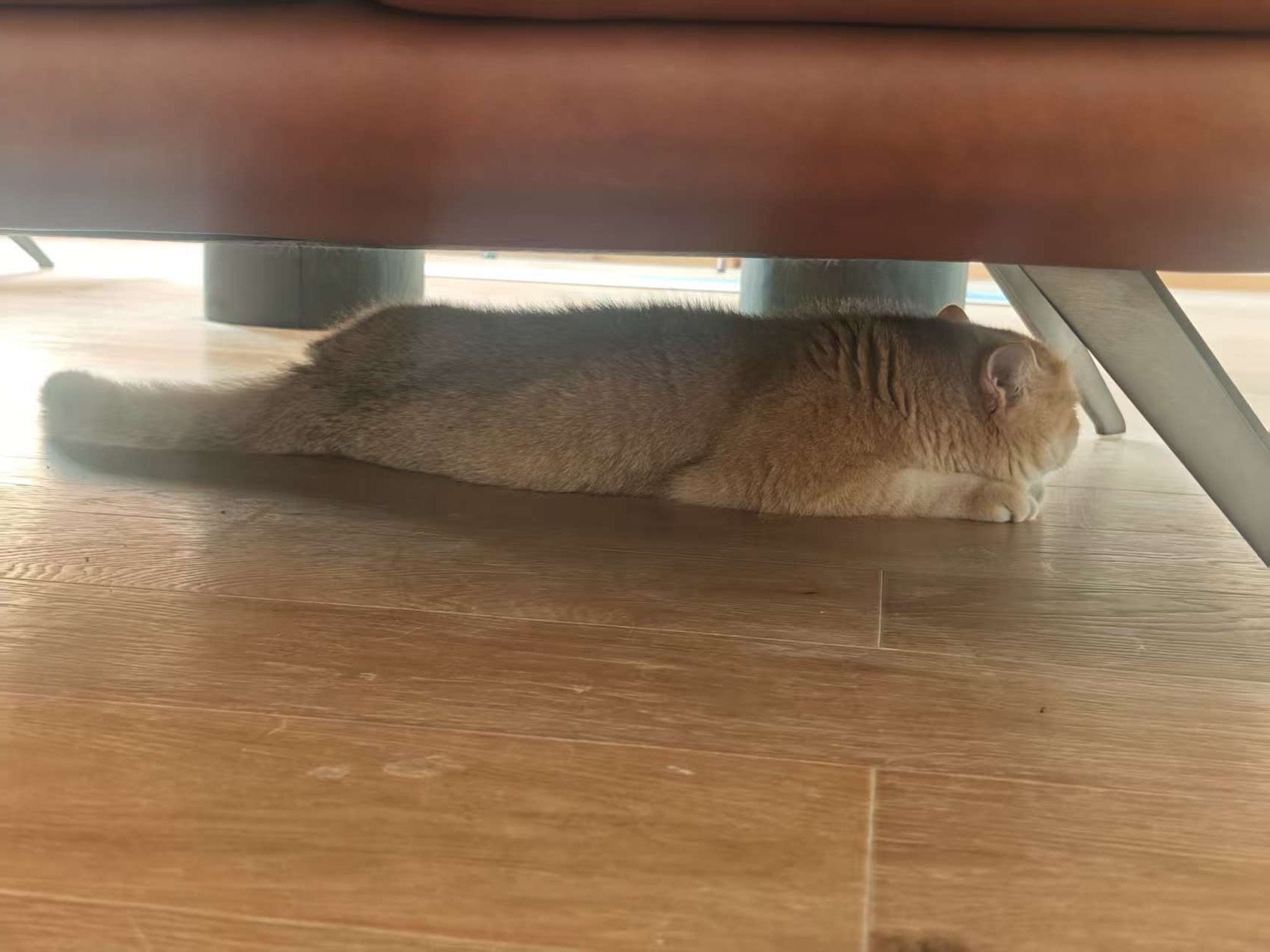
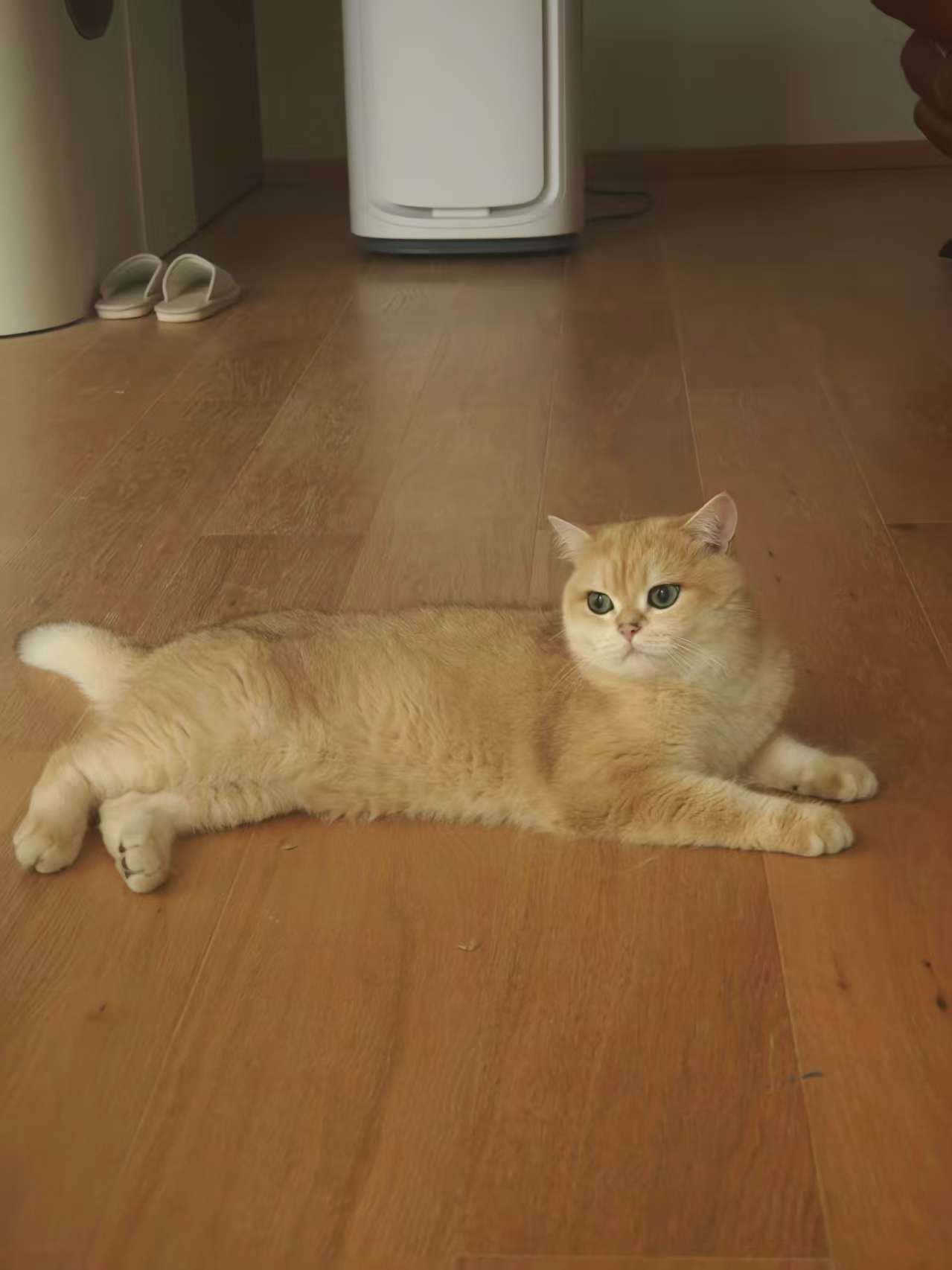
Here are two photos of lazy Jerry.
I basically skipped the rest of the conference and just wandered around outside. Let me get back to the cooking — the next dish was lamb pilaf. Having just come back from Xinjiang, my impression of it was still vivid. The method is simple too: choose good lamb ribs, skin-on, half-fat half-lean, without any gaminess, add a little oil and slowly pan-fry, then remove the lamb and set aside. In that same oil (now a blend with the rendered lamb fat), fry the vegetables — carrots 🥕 and yellow radish, whichever you prefer — then remove everything, add pre-soaked raw rice, and let it all braise together. What you get right away is rice that’s glossy, fragrant, faintly sweet, with lamb that’s firm, chewy, and full of that distinct lamb flavor.
Recipe Card
Ingredients
- Lamb ribsskin-on, half-fat half-lean
- Carrots, yellow radishcut into strips
- Raw ricepre-soaked
Steps
- Slowly pan-fry the lamb, then remove and set aside.
- Use the oil left in the pan to fry the vegetables.
- Add the soaked rice and braise everything together.
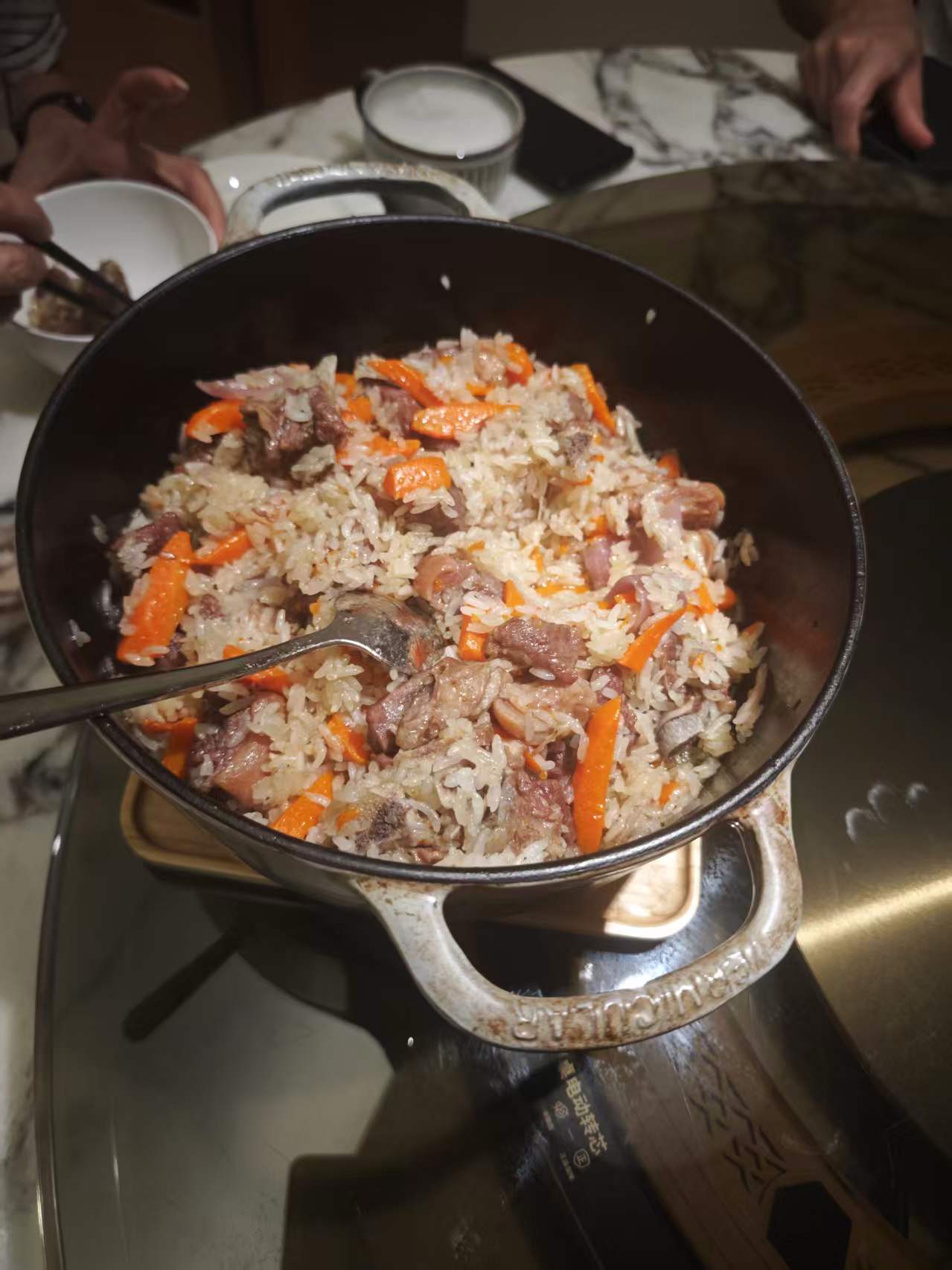
The next day I went to Wanxiang City mall — I have to say, in this season, even in Guiyang, the best activity around is still just wandering a mall. I passed all sorts of quirky little shops and local snacks, and walking into a bakery I wanted to buy everything — I ended up grabbing mountain-pepper soda crackers, various flavored crackers, and matcha egg tarts. Matcha products are everywhere in Guiyang; you can see the local adaptation at every turn.
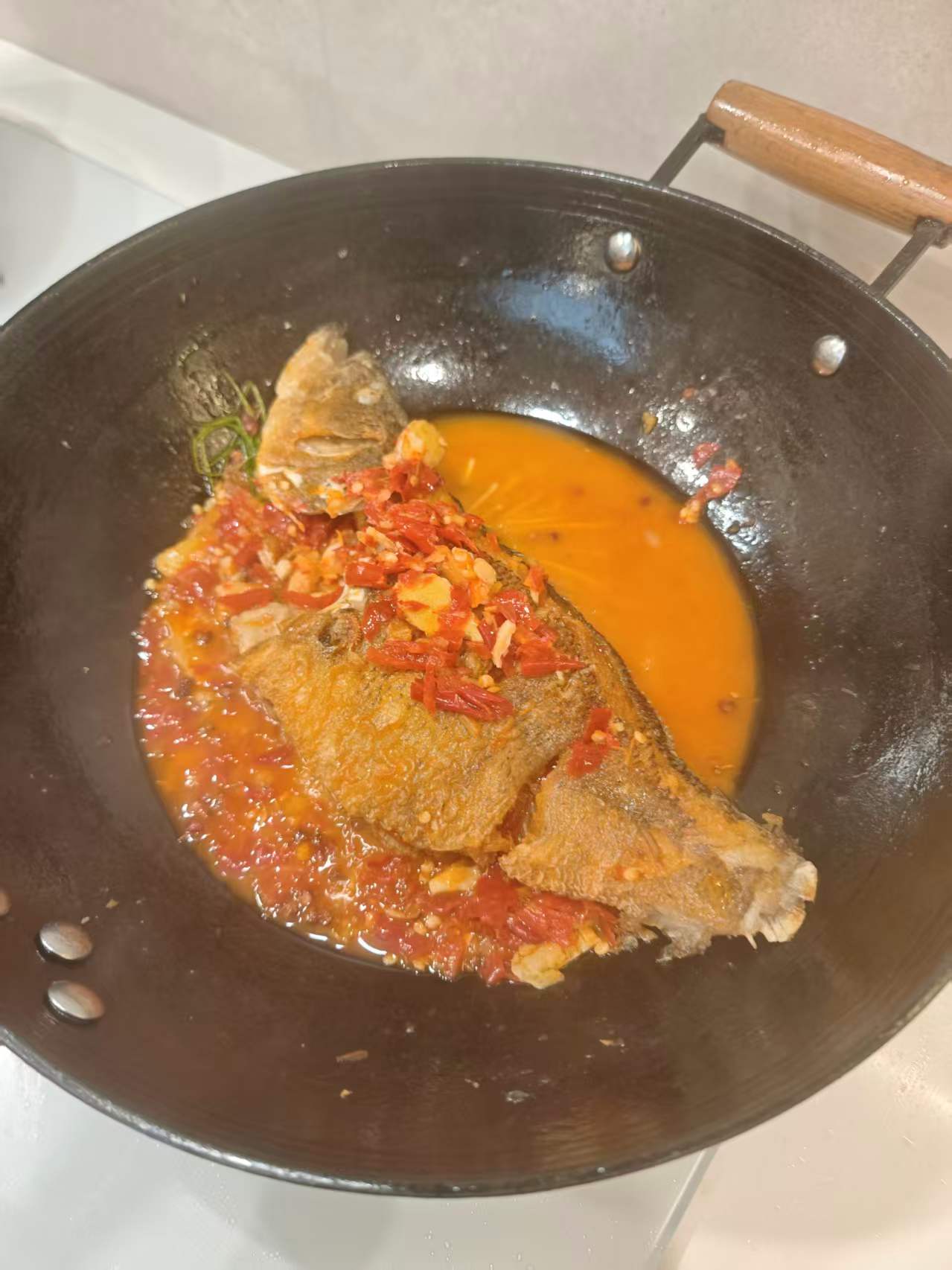
On my second-to-last full day in Guiyang I visited the provincial museum, which was overrun with kids running around and the AC wasn’t strong enough, so I fled fast to the urban planning exhibition hall across the street for some peace and quiet. That evening back home, Uncle and Auntie made zaolajiao sea bass. I spent the whole evening being useless while they cooked, and got to enjoy both the beautiful process and the result of their labor — the sizzle of hot oil pairing perfectly with the smell of chilies.
A Small Table of Guizhou Chilies
| Name | How it's made | Uses |
|---|---|---|
| Zaolajiao (fermented chili) | Fresh chilies minced, fermented with salt, ginger, garlic; distinctly sour and fragrant. | Braised fish, stir-fries, dipping sauces — adds a sour-spicy base note. |
| Cibaladjiao (pounded chili paste) | Dried chilies softened in water, then pounded fine, often slow-fried with ginger and garlic. | Spicy chicken, red broths, hotpot bases — responsible for rich, glossy red color. |
| Hulajiao (charred chili) | Dried chilies toasted or roasted until fragrant, then crushed, with a touch of smokiness. | Dipping sauces, cold dishes, tossed noodles — fragrance ahead of heat. |
| Youlajiao (chili oil) | Chili flakes bloomed in hot oil, sometimes with sesame or Sichuan pepper added. | Tossed noodles, mixed dishes, dipping — the finishing spoonful of color. |
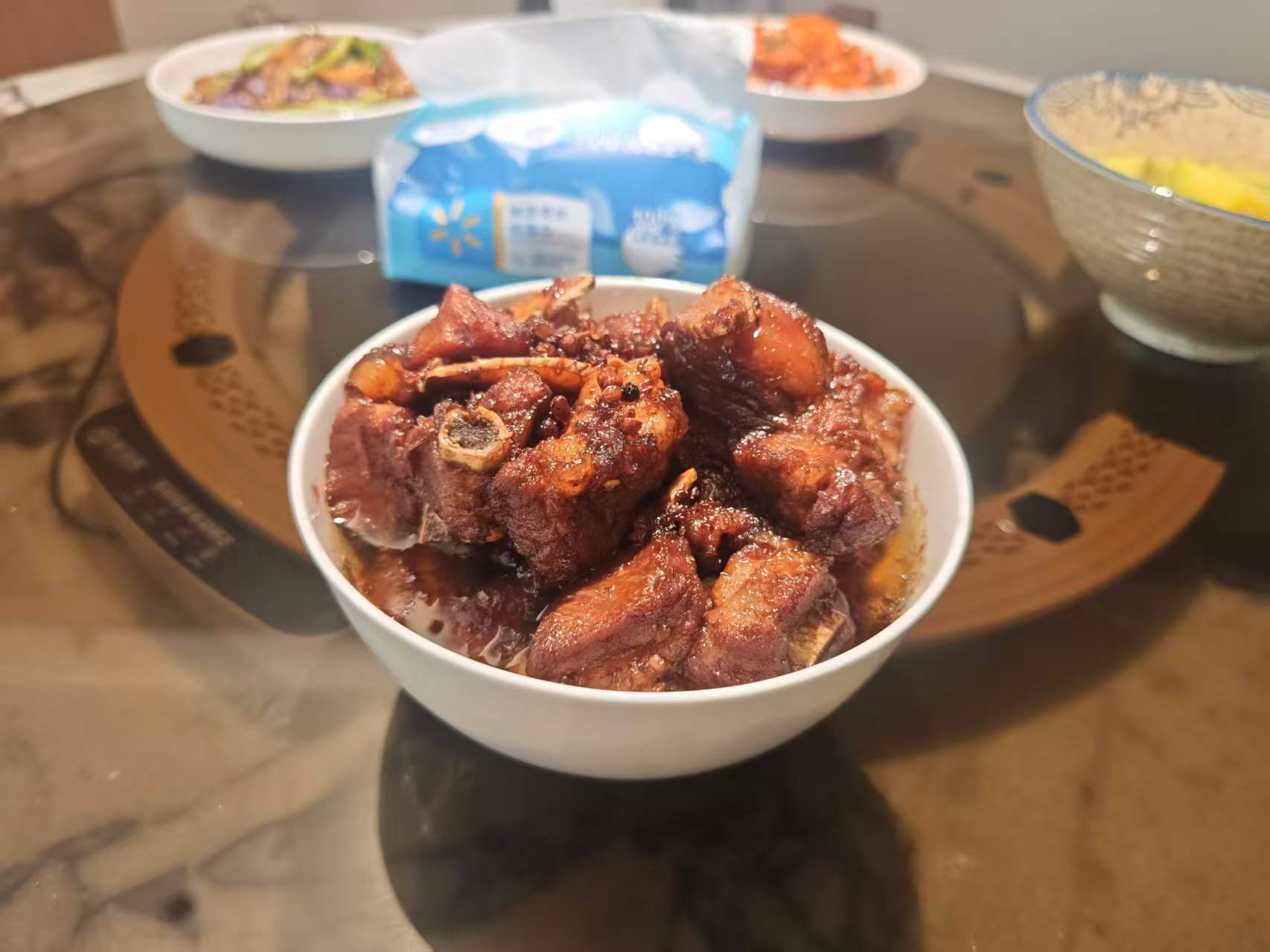
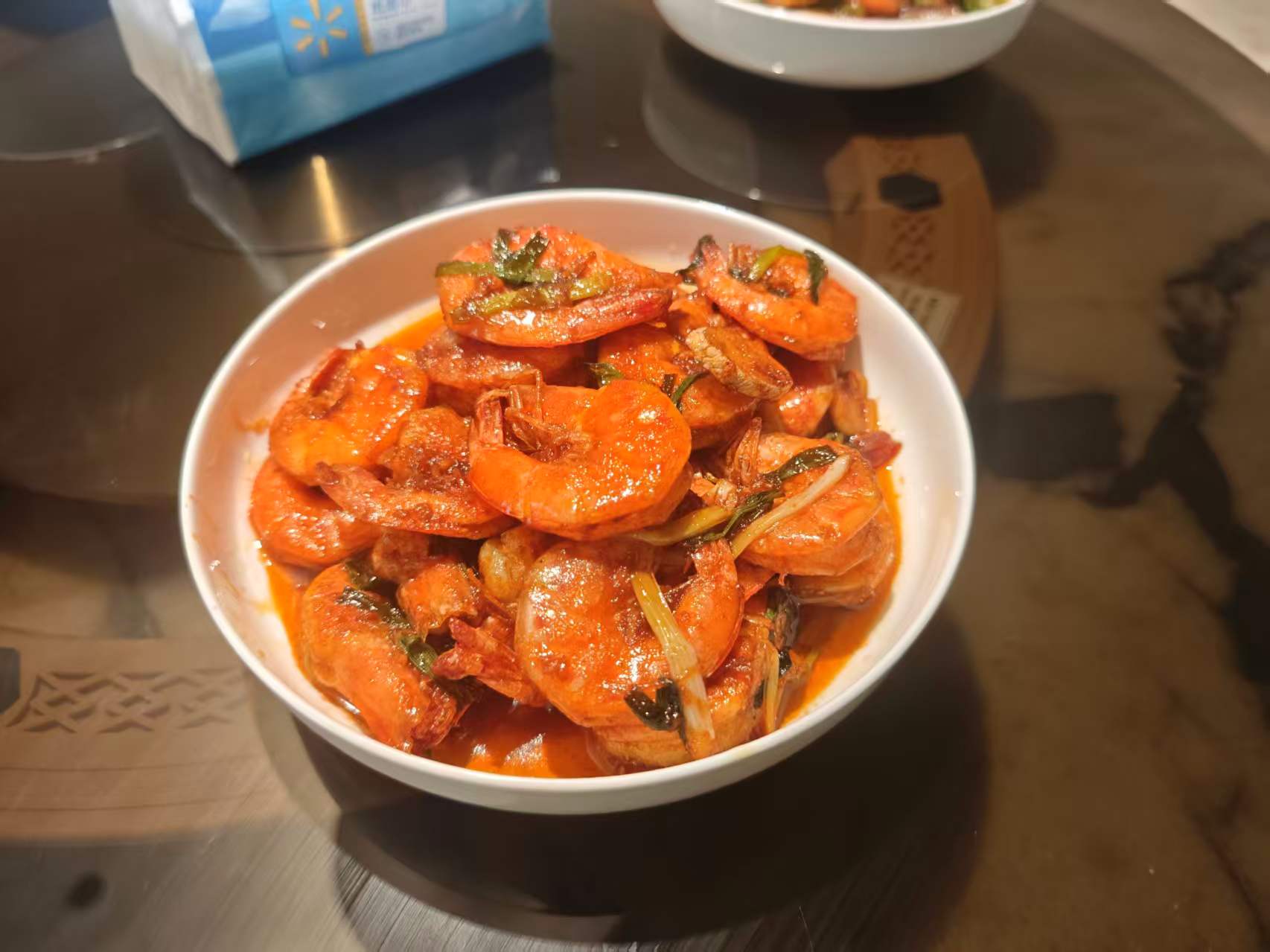
Auntie always picked quick, easy dishes so I could actually manage them back in America… The next day was sweet-and-sour ribs and tomato prawns. “Tomato prawns” is really more like oil-braised prawns in ketchup — sweet-and-sour seasoned prawns, split down the back and fried in the wok, then set aside; fry the seasoning and sauce until fragrant, then return the prawns to the wok and coat them thoroughly. The ribs get blanched and drained, then go into the pressure cooker with the “12345” seasoning mix, the ratio being one old-fashioned spoonful per half-kilo of ribs, pressure-cooked for thirty minutes, then reduced down depending on how much liquid’s left before plating. Sprinkle black sesame on top for fragrance — tender, falling off the bone. Both dishes looked gorgeous and appetizing; I tried them and fell in love.
Recipe Card
Ingredients
- Pork ribsblanched
- "12345" seasoningone spoonful per half-kilo
- Black sesamefor fragrance at the end
Steps
- Blanch the ribs, then transfer to the pressure cooker.
- Add the seasoning and pressure-cook for thirty minutes.
- Reduce down depending on the liquid, sprinkle with black sesame.
Recipe Card
Ingredients
- Prawnssplit down the back
- Tomato saucesweet and sour
- Seasoningfried fragrant, then returned to the wok
Steps
- Split the prawns and fry in the wok.
- Separately fry the seasoning and sauce.
- Return the prawns to the wok and coat in sauce.
This piece is mainly meant to be about the cooking, so I shouldn’t keep rambling on like a diary — once the rest is written, I’ll go back and rearrange it all properly.